


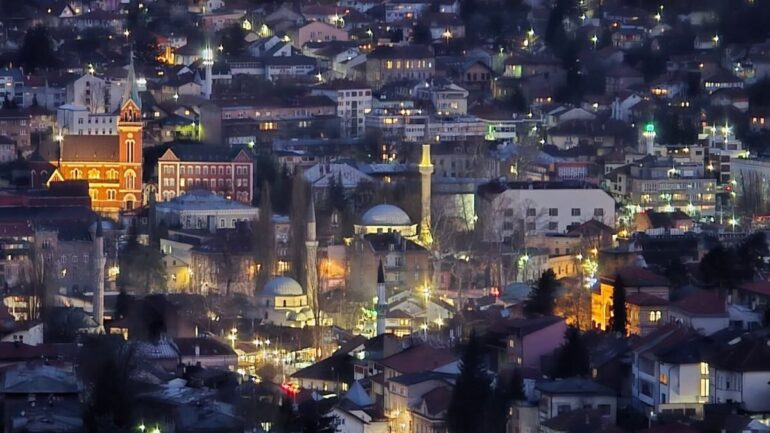
There are a handful of days each year when Sarajevo stops functioning like an ordinary city. Streets turn into cinema lobbies, cafés and terraces become extensions of festival conversations, and the walk between two screenings often turns into the best part of the day. The Sarajevo Film Festival is exactly that kind of moment.
From August 14 to 21, 2026, Sarajevo will host the 32nd edition of a festival that grew out of wartime cultural resistance into one of the most important meeting points for regional and European cinema. Today, the festival is far more than eight days of films. It’s the rhythm of the entire city: the first morning coffee in Baščaršija, the crowd outside the National Theatre, filmmaker Q&As, open-air screenings, exhibitions, chance encounters, dinners that run late, and nights that keep going long after the closing credits.
That’s exactly why it’s worth stopping by Festival Square at least once during the week, even without a ticket. That’s where the festival’s other, more informal side is easiest to feel. Within a few hundred meters, you’ll find film students, journalists, actors, producers, directors, CineLink and Talents Sarajevo guests, and simply people who came for a coffee and to see what’s happening.
Here’s FBL mini guide to Sarajevo during the Festival — what to watch, where to stop, which conversations not to miss, and how to catch that specific atmosphere that keeps guests coming back year after year.
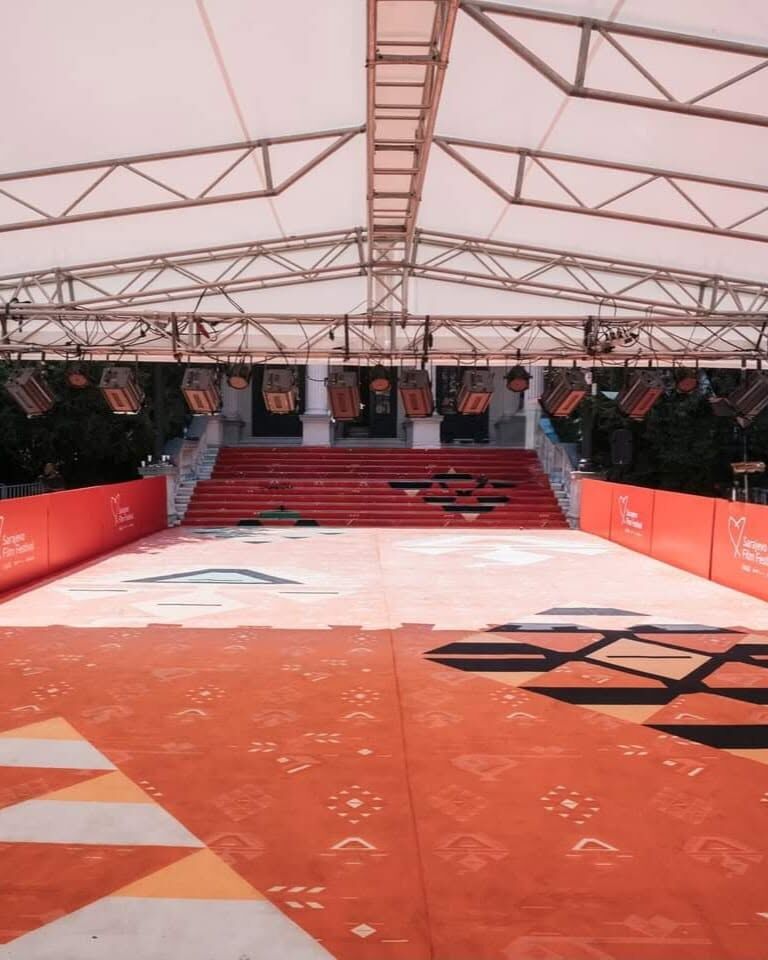
Sarajevo Film Festival 2026: Key Information
The festival runs from August 14 to 21, 2026, though the film program traditionally kicks off the evening before, on August 13. It opens with Fatherland by Paweł Pawlikowski, winner of the Best Director award in Cannes — a story about writer Thomas Mann and his daughter Erika, set in the summer of 1949. The closing slot on August 21 is reserved for a restored version of the Oscar-winning No Man’s Land by Danis Tanović, marking the film’s 25th anniversary.
The opening ceremony is hosted by actor Kerim Čutuna, and this year’s program spans more than ten venues across the city, alongside an accompanying online program.

Honorary Heart of Sarajevo Award Winners
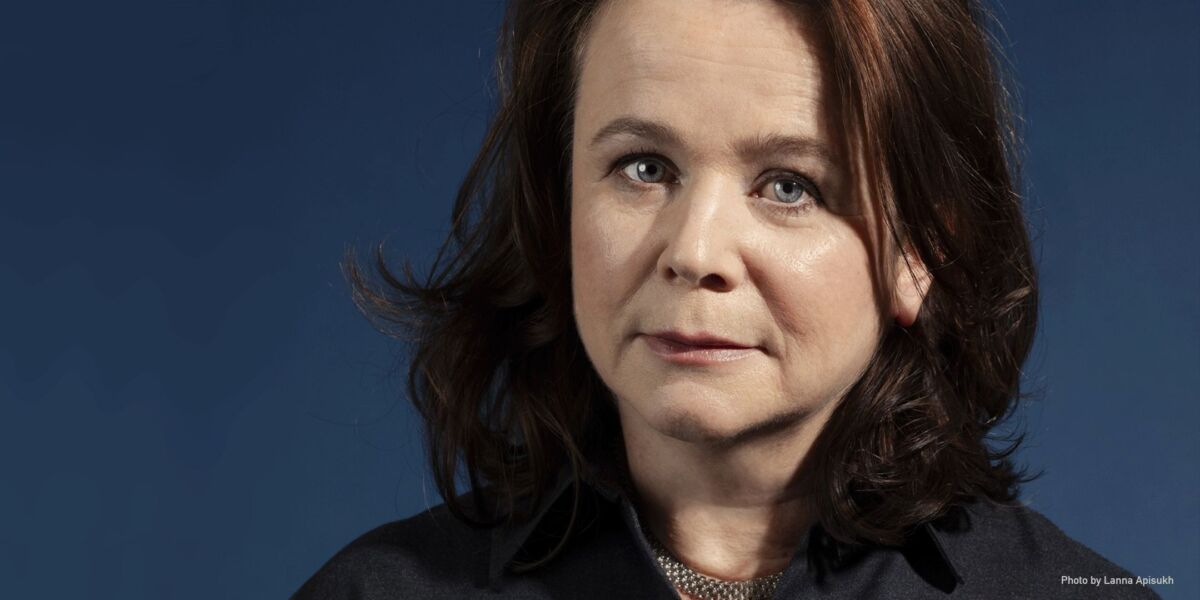
This year’s edition brings several major names in world cinema to the city. Emily Watson arrives as president of the Feature Film Competition jury and recipient of the Honorary Heart of Sarajevo. Asghar Farhadi, the Iranian director and screenwriter, receives the same honor alongside a retrospective of his films as part of the Tribute program. Diego Luna receives the Honorary Heart of Sarajevo for an outstanding career and lasting contribution to film, with a screening of his new film Ashes and a masterclass. Woody Harrelson arrives with the same recognition, accompanied by a screening of Welcome to Sarajevo (Michael Winterbottom, 1997), a film about the Bosnian war of the mid-1990s in which he himself starred. This year’s Honorary Heart of Sarajevo also goes to Bosnian actor Emir Hadžihafizbegović.
Sarajevo Film Festival Guide: Must-See Films
This year’s Competition Program features 51 films competing for the Heart of Sarajevo, plus one out of competition, selected from 1,215 submissions: 21 world premieres, six international, one European, and 23 regional premieres.
As mentioned, the festival opens with Paweł Pawlikowski’s Fatherland and closes with Danis Tanović’s No Man’s Land — both essential viewing. We also recommend Ashes, Diego Luna’s new film about a brother and sister traveling from Mexico to Madrid, and the aforementioned Welcome to Sarajevo by Michael Winterbottom, screened to mark Woody Harrelson’s Honorary Heart of Sarajevo.
Recommended: Feature Film Competition
If you’re planning to watch a few narrative features at this year’s Sarajevo Film Festival, these titles stand out. Some arrive fresh from the world’s most prestigious festivals like Cannes and Locarno, while others will have their world premieres right here in Sarajevo. What they share is acclaimed filmmakers or striking newcomers behind them, which already makes them some of the most interesting films in this year’s program.
– Everything That’s Wrong With You, by Slovenian director Urša Menart, has its world premiere at the Sarajevo Film Festival. The film follows a woman who, after her mother’s death, begins an online relationship with a nurse in Germany. Menart already showed a remarkable feel for intimate, lived-in stories with My Last Year as a Loser, so expectations are high for this one, too.
– Everytime by Austrian director Sandra Wollner comes to Sarajevo after premiering in Cannes’ Un Certain Regard section. Wollner has spent years building a reputation as one of Europe’s most interesting filmmakers, making this one of the strongest festival pedigrees in the program.
– You Don’t Belong Here, by Romanian director Florin Șerban, had its international premiere at Locarno Film Festival before arriving in Sarajevo. Selection at Locarno alone signals a film that’s already passed a demanding international curation process.
– 17 by North Macedonian director Kosara Mitić arrives in Sarajevo as one of the more notable debut films in the regional competition. The young filmmaker is already drawing attention for her distinctive authorial approach, making this a promising festival discovery.
Recommended: Documentary Competition
Program curator Rada Šešić selected 22 titles from 305 submissions, with an emphasis on politically engaged, intimate stories.
– Bear With Me by Bulgarian director Martin Genovski has its world premiere at the Sarajevo Film Festival. This unusual documentary follows Europe’s last female circus trainer of wild bears and her relationship with a bear named Natasha — an emotional story about humans, animals and the end of a tradition, rich with archival footage.
– Good People by director Milcho Manchevski also has its world premiere in Sarajevo. Manchevski is one of the most respected Balkan filmmakers (Before the Rain won the Golden Lion in Venice), so his new film is already among the festival’s favorites. It’s inspired by the tragedy in Kočani and explores human solidarity in times of crisis.
– The Balkan Cowboy by Croatian-Irish filmmaker Dragana Jurišić has its world premiere at SFF. Jurišić is an internationally recognized photographer, so an especially strong visual style is expected. The film already stands out as one of the most intriguing titles in this year’s program.
Open Air Program: Films Under the Stars
For an atmosphere under the open sky, the Open Air program is worth singling out — it traditionally brings some of the year’s most acclaimed films fresh from premieres at the world’s biggest festivals.
– Minotaur by Andrey Zvyagintsev, winner of the Grand Prix in Cannes, is one of the most anticipated European films of the year and an almost mandatory festival screening.
– The Beloved by Rodrigo Sorogoyen had its world premiere in Cannes’ main competition, where it competed for the Palme d’Or. The new film from one of Spain’s most acclaimed contemporary directors is one of this year’s Open Air highlights.
– No Good Men by Shahrbanoo Sadat opened this year’s Berlinale, confirming the director’s status as one of the most important voices in contemporary Afghan cinema.
– Palestine 36 by Annemarie Jacir tells a story from Palestinian history — a theme the director keeps returning to throughout her work. Jacir is one of the most important names in contemporary Arab cinema.
How to Get the Most Out of Sarajevo Film Festival Films
Anyone who wants to experience the festival at full intensity should do two things. First, watch at least one world premiere by an unknown filmmaker. Big names are a draw, but SFF is at its most exciting when you walk into a film with no IMDb rating and no reviews yet — and this year, there are numerous world premieres across the feature, documentary, and short film competitions. Second, pick one film you’d never normally choose. If you usually only watch narrative features, try a documentary; if you’re into arthouse, check out an Open Air crowd-pleaser; if you never watch short films, try a shorts block. That’s the best way to make SFF a true festival experience, not just a week of trips to the cinema.
Asghar Farhadi Retrospective: A Small Festival Within the Festival
Two-time Oscar winner Asghar Farhadi is this year’s recipient of the Honorary Heart of Sarajevo, and he’ll attend the festival in person. To mark the occasion, the Sarajevo Film Festival dedicates its Tribute To program to him, giving audiences the chance to watch a retrospective of his films and attend his public conversations and audience meet-and-greets.
Farhadi is one of the most important contemporary voices in world cinema. Films like A Separation, The Past, and The Salesman have won the world’s most prestigious awards, including two Oscars, a Golden Bear in Berlin, and honors in Cannes. His trademark is complex characters, moral dilemmas, and family stories that open up universal questions about truth, responsibility, and justice.
His public appearances throughout the festival are also worth following. Farhadi returns to Sarajevo eight years after serving as president of the Feature Film Competition jury in 2018. His latest work, the French production Parallel Stories, has just premiered at this year’s Cannes Film Festival — meaning Sarajevo audiences will be among the first in the region to see his newest film. For fans of auteur cinema, this is one of the most valuable programs at this year’s Sarajevo Film Festival.
Masterclasses, CineLink and Talents Sarajevo
Masterclasses are traditionally held at the Festival Center, in the Bosnian Cultural Center (Branilaca Sarajeva 24), and admission is free with a ticket reserved online or at the main box office. A masterclass with Diego Luna has already been announced to mark his Honorary Heart of Sarajevo award, while masterclasses for the other recipients — Woody Harrelson, Emily Watson, Asghar Farhadi, and Emir Hadžihafizbegović — are traditionally organized around each major guest, with schedules published in the final weeks before the festival.
For everyone who doesn’t just watch films but works in the industry — screenwriters, producers, directors, distributors, or those just breaking in — CineLink Industry Days is arguably more important than the red carpet. The program includes project development, pitching sessions, industry talks, meetings, and networking, and SFF has already announced this year’s CineLink projects and Work in Progress selection. Not every part of this program is open to the general public, so it’s worth planning around that when scheduling your days — it’s clearly separate from the public masterclasses. The same goes for Talents Sarajevo — not a tourist event, but one of the festival’s most important parallel programs for young filmmakers.
What to Do in Sarajevo Between Film Screenings
The festival doesn’t only happen inside cinemas, and that’s exactly what sets it apart from most similar events. Morning coffee and an evening stroll through Baščaršija are practically mandatory festival rituals for every visitor to Sarajevo.
If you have free time between two screenings, riding the cable car up to the top of Trebević offers a view over the entire city and an hour or two of escape from the festival buzz — a striking contrast after cinema halls and hot streets.
It’s also worth setting aside an hour for Festival Square, even without a film ticket. The Festival Center, press zone, and areas around the BKC are, all week long, one of the best ways to feel the industry side of SFF — film students, journalists, filmmakers, producers, guests, and people from the Talents Sarajevo and CineLink world all pass through here, so you can soak up the atmosphere without even sitting in a theater.
Best Cafés and Hangout Spots During Sarajevo Film Festival
The festival isn’t measured only by the number of films you watch, but also by the coffees you drink in between — so the city’s daytime rhythm deserves just as much attention as the nightlife.
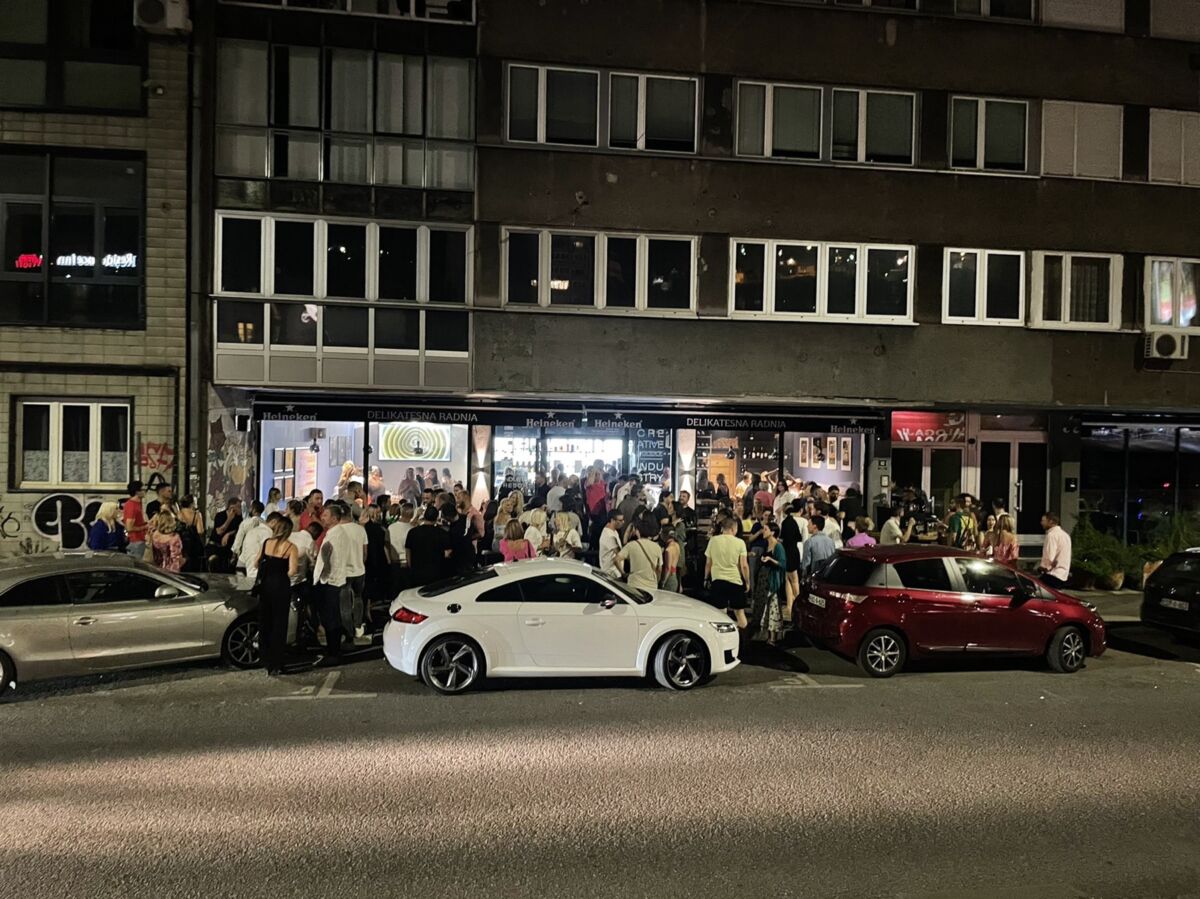
Around Festival Square and the National Theatre, one continuous, lively hub takes shape. Besides the café that pops up directly on the square itself — a central meeting point — nearby you’ll find cult gathering spots that form the beating heart of daily festival life. There’s Caffe Club Mash, a traditional spot for rock and jazz fans with live bands every evening, the legendary Delikatesna radnja, and the unmissable Caffe Opera and Barometar. This entire stretch around the square radiates authentic Sarajevo energy — perfect for a quick break, a fast coffee, or running into film crews throughout the day.
For those who want to rise above the festival crowds, S-One Sky Bar sits atop the Courtyard by Marriott hotel, ideal for a drink with a view over the city. On the other hand, if you’re after the most beautiful visual experience as the day winds down, the iconic Kamarija remains unrivaled — it’s widely considered the best spot to catch Sarajevo’s famous sunset.
A special, almost magical spirit runs through the steep, cobbled market street of Kovači. Sipping coffee or tea here, you’ll hear the recognizable, rhythmic sound of hammers from workshops right across the street — a centuries-old craft still alive. Traditional coppersmith and engraving workshops add extra character to this ambiance, including the iconic Hadžić Family Manufaktura and Edin Kazaz’s workshop, whose hand-made copper coffee pots (džezvas), pitchers, and unique pieces preserve the spirit of an age-old tradition.
In that same street sits the charming Birtija, with its bohemian atmosphere, and the famous Čajdžinica Džirlo, whose colorful rugs preserve authentic Bosnian tea culture. Right next door is Ministry of Ćejf, a popular “ministry of leisure” and a favorite stop for locals and visitors alike, while charming spots like Ašik and Behut Coffee Shop round out this unique stretch made for merak (a Bosnian word for savoring life’s simple pleasures) and easy conversation.
Beyond the classic old-town routes, the festival map leads to two more must-visit spots. At Dženetića čikma 16, you’ll find KAWA Specialty Coffee Bar, Sarajevo’s first specialty coffee shop, whose minimalist interior and serious approach to coffee have made it an essential stop during SFF. For a calmer, quieter start to the day, there’s also Franz & Sophie on Petrakijina Street, well known for its outstanding tea selection and relaxed morning energy.
Exhibitions Worth Visiting During SFF
For anyone spending festival days in Sarajevo — especially visitors from out of town — touring museums and exhibition spaces is an essential part of the experience while the city is in full creative swing.
One of the strongest recommendations for an exhibition tour is the Art Gallery of Bosnia and Herzegovina (Zelenih beretki 8). To mark a major milestone — the gallery’s 80th anniversary — the exhibition Presence by Edin Numankadić has been open since June 25 and continues throughout August. It’s a carefully curated retrospective drawing on five decades of work by one of the most significant figures in Bosnian and Herzegovinian modern art. While you’re there, don’t miss the permanent collection Gallery of Enthusiasm, which holds around 600 precious works from the gallery’s founding collection.
Fans of the contemporary art scene shouldn’t skip Collegium Artisticum, where the exhibition Creative Dialogue: Belgrade — Sarajevo opened on August 4. Running through August 25, 2026, this exhibition is the most comprehensive and significant presentation of the contemporary Belgrade art scene in Sarajevo in the past four decades, bringing together 61 artists across different generations, styles, and media.
An inspiring visual experience also awaits outdoors: along Vilson’s Promenade, the exhibition Memories of Theatre Costumes has been set up by the Museum of Literature and Theatre Arts of Bosnia and Herzegovina, created as part of the Culture for the People project. Here, costumes aren’t displayed merely as clothing but as silent witnesses to an era, old stages, and generations of artists who shaped the city’s theatrical history.
A special cultural highlight just before the festival comes from the ULUPUBiH Gallery (Koševo 7), which opens its new exhibition season with the project Space of Design. The opening is scheduled for Wednesday, August 12, 2026, at 7:00 PM. Supported by the Ministry of Culture and Sports of Sarajevo Canton, the project is conceived as a new exhibition program dedicated to applied art and design, focused on promoting original design practices, professional dialogue, and the role of design in contemporary society.
Museums You Shouldn’t Miss
Besides accompanying and newly opened exhibitions, Sarajevo offers its own classic museum treasures that preserve the soul and history of the region.
While the future building of the Ars Aevi Museum of Contemporary Art is under construction, part of its valuable collection is on display at Sarajevo’s City Hall (Vijećnica). Created during the siege of Sarajevo as a symbol of cultural resistance and international solidarity, the collection brings together works by some of the world’s most significant artists, including Anish Kapoor, Marina Abramović, Joseph Beuys, Michelangelo Pistoletto, and many others. Visiting this exhibition is a chance to see, in one place, part of a unique art collection built through donations from leading artists around the world.
The National Museum of Bosnia and Herzegovina is another essential stop, home to a rich permanent collection that includes the priceless Sarajevo Haggadah, whose specially guarded vault can be visited by prior appointment. Nearby is the History Museum of BiH, open daily from 9 AM to 7 PM, with permanent and temporary exhibitions documenting the turbulent history of the city and the entire country.
Exploring the Sarajevo Museum takes you through its various branches, such as the Jewish Museum of BiH or the striking Brusa Bezistan, though among them, Svrzo’s House stands out for its beauty and atmosphere. This gem of Ottoman architecture offers an unrepeatable glimpse into tradition, and on Wednesday evenings — including August 12 and 19 — a special sevdah music program featuring Damir Imamović is held in its courtyard and rooms. The combination of an authentic museum setting and top-tier live music creates a magical atmosphere you’ll remember for a long time.
Finally, for those with a deeper interest in war and post-war themes and the history of survival, the War Childhood Museum and Gallery 11/07/95 are two of the most visited, thoughtfully curated, and emotionally powerful exhibitions in the city — both essential visits.
Sarajevo Street Art
Sarajevo also has a contemporary art layer that’s easy to overlook, even amid the festival crowds: street art murals. Instead of a classic gallery visit, it’s worth setting aside part of a day for a street-art route. The team behind the FASADA festival is working to turn the city into an open-air gallery and organizes guided tours. This is a particularly good idea for a morning between two late SFF nights, when your body needs an easy pace but your mind still wants something visually engaging.
All of this adds up to a ready-made art + film afternoon formula: FASADA murals → coffee downtown → an early short-film screening → an evening Open Air session — a sequence that combines open-air art, a calm coffee break, and two different kinds of film experience in a single day.
The Red Carpet
If you don’t have a ticket and can’t get into every screening at the National Theatre, be sure to catch the evening red carpet and spot the stars. Every evening, crowds gather outside the theatre to watch film crews and regional and international acting names arrive, making it a perfect way to soak up a bit of that glamorous open-air atmosphere, even without a ticket.
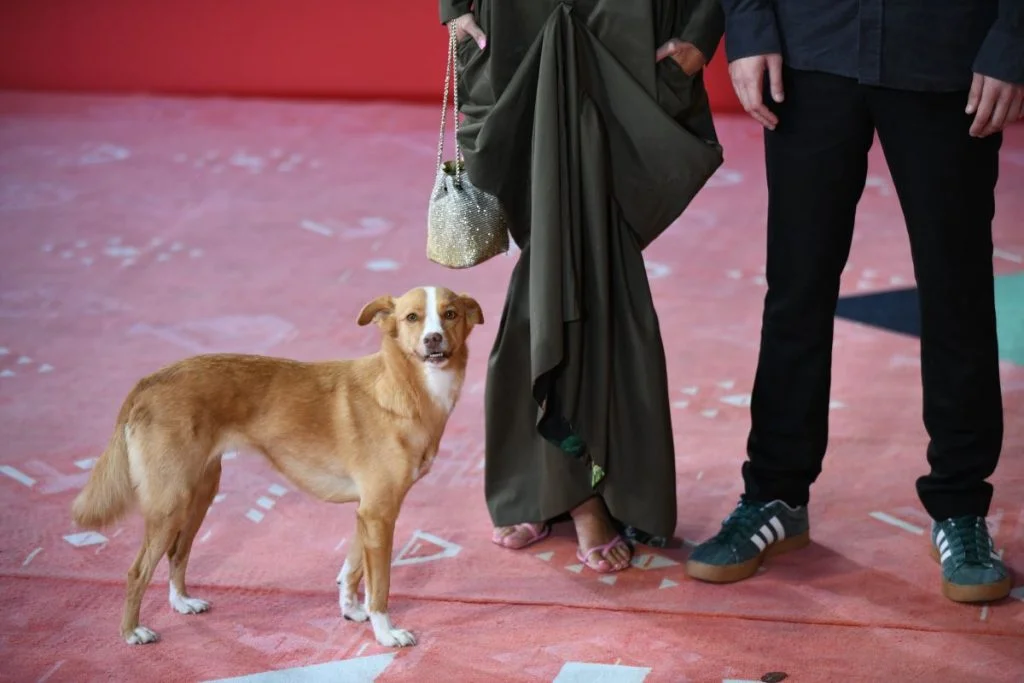
The Park in Front of the BKC: A Favorite Outdoor Gathering Spot
The park in front of the BKC (Bosnian Cultural Center) is always the main gathering spot during festival days and is practically packed at any given moment. You’ll find a bit of everything here — from casual passersby and festival guests to crowds of young people relaxing on the grass and benches, socializing and drinking. People gather spontaneously from early afternoon until late into the night, creating one of the most relaxed and lively atmospheres in the city.
Best Parties and Nightlife During Sarajevo Film Festival
Festival nights in Sarajevo last just as long as the film program itself, and often spill well into the next morning. For these seven days, the city completely shifts its rhythm, offering an impressive range of events for every taste and energy level.
The first big weekend of festival madness is reserved for Saturday, August 15, when the popular Matinée event series, held in the parking lot behind Skenderija, brings Indira Paganotto, one of the most in-demand psy-techno artists on the global scene. The event starts at 6:00 PM and is scheduled to run until 6:00 AM the next morning. Demand is huge — Early Bird and the first regular ticket phase are already sold out, while Phase II tickets are available for 35 KM, along with VIP on-stage tickets priced at 120 KM.
Alongside individual spectacles, the working part of the week brings a mini-festival within SFF itself — the famous Circus Maximus, which runs four major EDM nights from August 18 to 21 on the summer terrace of Hotel Europe. Doors open around 9:00 PM, music starts an hour later, and dancing on the terrace continues until 5:00 AM. The strongest and most production-heavy night is Wednesday, August 19, featuring Regard, known for his crossover deep-house-pop sound, and veteran house and EDM name Fedde Le Grand.
At the same time, the Heineken Summer Lounge 2026 is confirmed on the Skenderija Plateau from August 14 to 21. This venue remains one of the central SFF party hubs, known for a completely different DJ lineup every night, gathering dozens of local and guest names.
Naturally, the city’s club scene doesn’t stop there. Between the iconic Silver & Smoke and Frka clubs, plus numerous rooftops and pop-up spaces, six to nine different party options are on offer every night — the only real question is how many sleepless nights your body can handle.
The grand finale and official closing seal of the festival, on August 21, traditionally belongs to the globally popular Solomun. He returns to Sarajevo that evening to hold a free street party by the Eternal Flame marking SFF’s closing — an event that gathers tens of thousands of people in the heart of the city for a night that’s remembered forever.
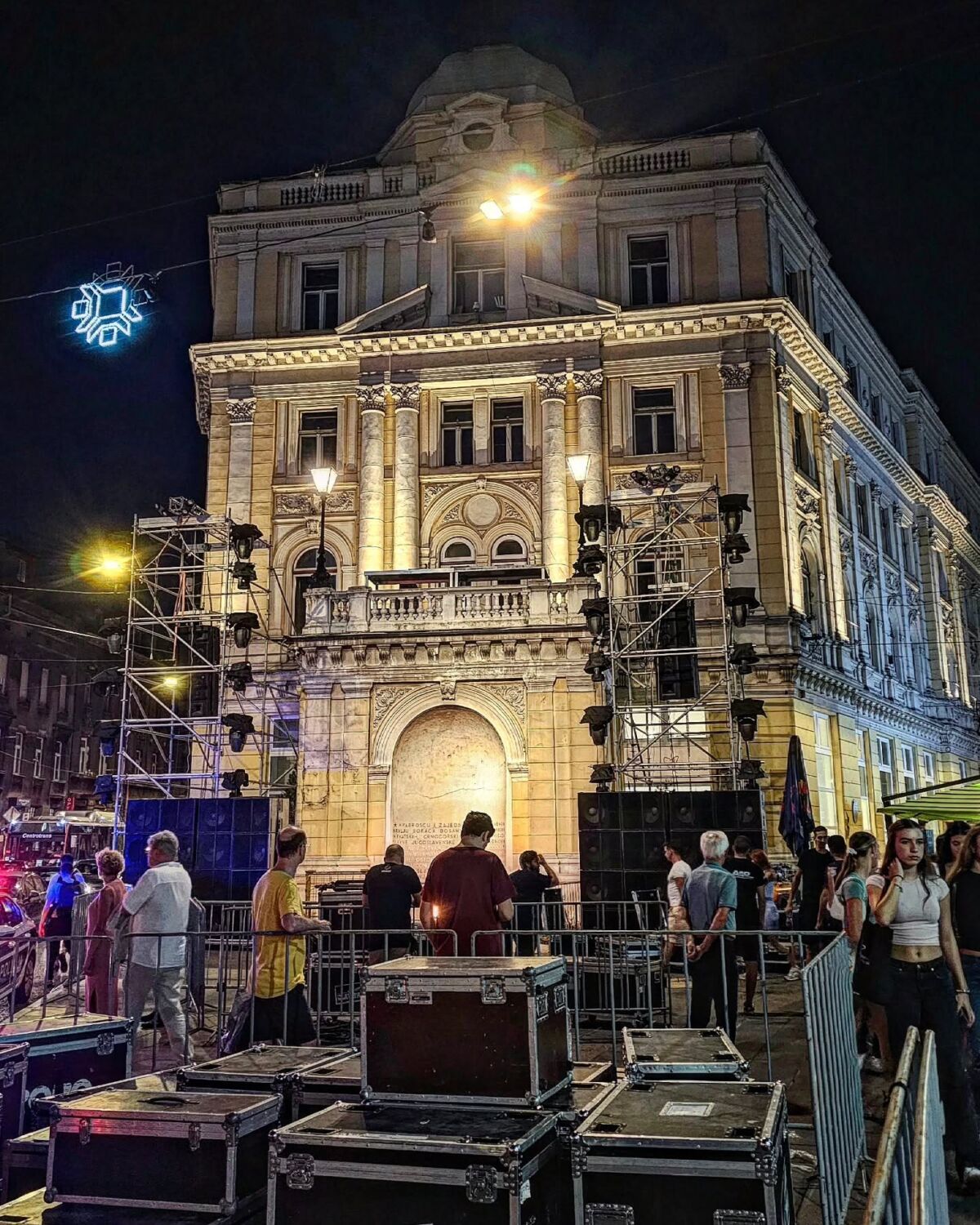
Traditional Zona Party
A special place on the festival map belongs to Zona Party, an event that isn’t meant for typical clubbing but instead serves as a key gathering for the film industry — filmmakers, actors, producers, and professionals from the world of cinema. The traditional Zona Party will be held on Monday, August 17, starting at 10:00 PM at Pivnica Sarajevo, at Maršala Tita 7 (entrance from Hastahana Street). Note that entry to this prestigious industry event is invitation-only.
Sara Vojičić Concert
Even though the city is literally packed with electronic and pop music during these days, it’s worth noting that fans of different musical tastes often don’t have much to choose from.
For lovers of quality live sound, though, there’s a special musical event to add to your list: as part of the 6th Festival u Centru, a Sara Vojičić concert will take place! Known for her outstanding vocal performances and powerful stage presence, Sara Vojičić brings a refreshing change to the festival program, offering audiences a perfect alternative to the usual electronic and pop offerings. The concert is scheduled for August 17 at 9:00 PM on Radićeva Street in Sarajevo.
The Terrace at Saket’s: A Cult Spot and Unofficial Sarajevo Film Festival Headquarters
If there’s one address that no serious Sarajevo Film Festival guide can skip, it’s undoubtedly the terrace at Saket’s. This cult spot, set on an outdoor terrace, has long outgrown the definition of an ordinary hangout — in Sarajevo’s festival folklore, it’s a genuine institution, the unofficial headquarters and heart of the gathering for everyone who lives and breathes film during that week.
Every year, right here, after the late screenings and before the night spills over into one of the city’s big parties, an irreplaceable energy builds around great music and an even better crowd. Filmmakers, actors, production crews, and audiences fresh out of the same cinema hall gather here. Conversations that began in front of the big screen continue over beer, flowing spontaneously until they turn into one of those legendary get-togethers people talk about for the next twelve months.
A special kind of charm and intimacy comes from one golden rule: even the festival’s biggest guests often stop by here, and everyone enjoys it endlessly because photography is strictly forbidden. It’s precisely this precious privacy, relaxed atmosphere, and that particular who’s here tonight energy that make the terrace at Saket’s rightfully considered the place where the real, unofficial SFF happens — not in front of red-carpet camera flashes, but in conversations that last until the early hours.
And given that nothing in Sarajevo can happen without good stories among friends, the wildest rumors and urban mythology swirl every year about how to even get up there when it’s at its most crowded. Some swear by the legend that you only get in if Saket (Samir Hodović) himself looks at you and nods, like something out of a classic film; others insist you have to recite at least three lines of dialogue from award-winning SFF films to pass the test.
How to Plan Your Last Day at Sarajevo Film Festival
The final day of the festival, Friday, August 21, carries a distinctive, slightly bittersweet but intensely charged energy — so it’s best to keep it as open and unscheduled as possible in advance. After seven days of running from screening to screening and nights spent in the city’s gardens and terraces, this day calls for a slower pace and simply enjoying the moment.
An ideal festival finale starts with an earlier film or short program during the afternoon. After that comes the obligatory calmer part of the day — an unhurried dinner at one of the old-town restaurants or a favorite garden spot, reflecting on the week with friends.
Then, as night slowly falls over the city, comes the moment when all of Sarajevo’s streets begin flowing toward a single point. The crown of the whole week belongs to the globally popular Solomun by the Eternal Flame. Although this performance isn’t technically or officially a Sarajevo Film Festival party, the audience absolutely treats it as the unmissable, grand finale. At this spectacular free street party, essentially the entire city gathers to celebrate together and close out another magical edition of the Sarajevo Film Festival.
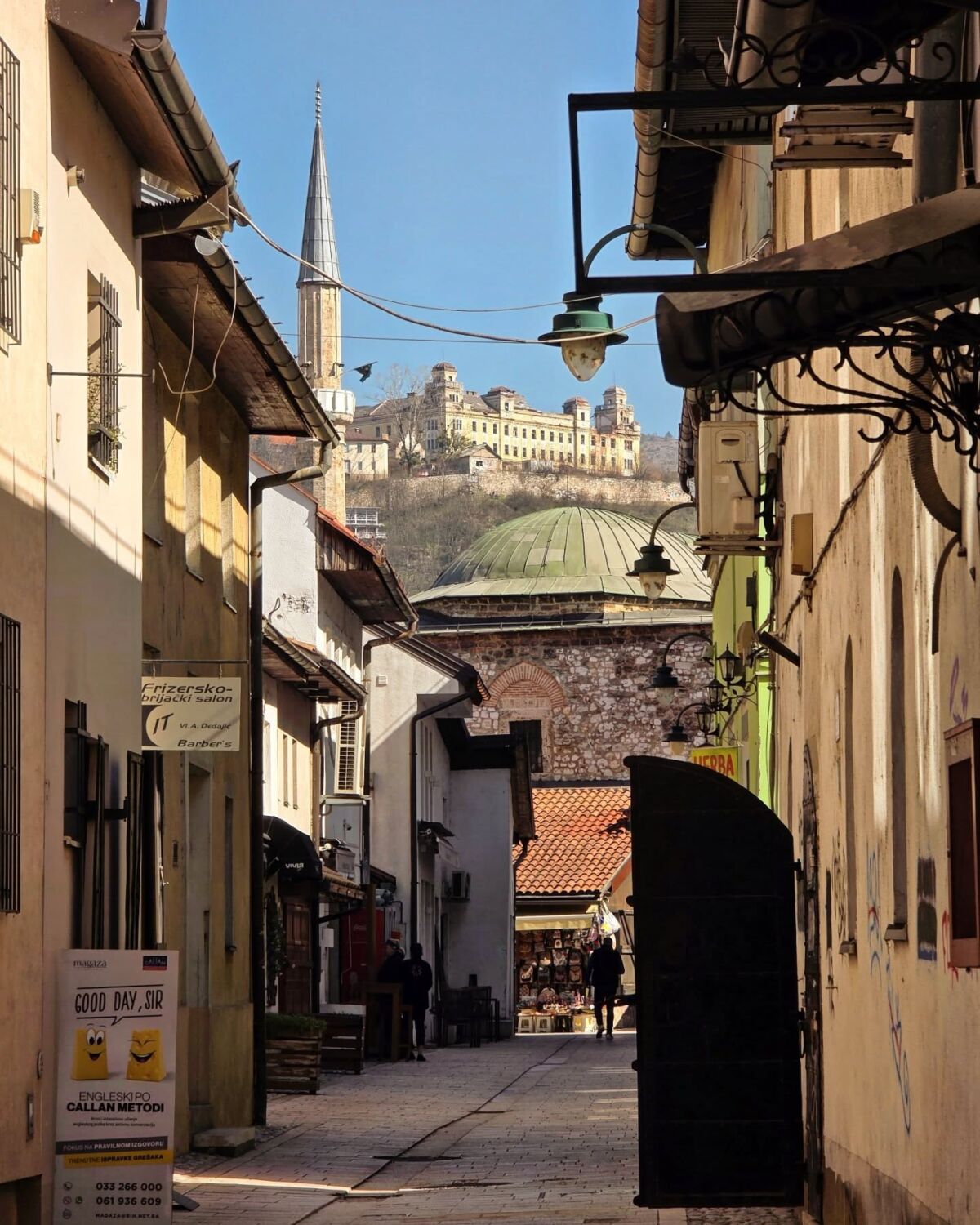
Good to Know Before Booking Accommodation in Sarajevo
One of the most common mistakes visitors make happens even before arrival, when booking accommodation. On a map, an apartment might look like it’s just three or four minutes from Baščaršija, but in Sarajevo, that doesn’t necessarily mean an easy walk. The city is surrounded by hills, and many streets in the Old Town climb very steeply, so a few hundred meters can mean a serious climb, especially if you’re carrying luggage or heading back after midnight from the last screening or party.
That’s why it’s essential to check the exact location before booking, not just the stated walking distance. Look at photos of the approach, check whether the accommodation is on the main street or up a slope above Baščaršija, and whether there are stairs to the entrance. If you plan to spend most of your day at the festival, accommodation in the flatter area between Baščaršija, Ferhadija, and Marijin Dvor will often be more practical than an apartment with a stunning city view but a daily climb.
That said, if a bit of exercise doesn’t bother you, Sarajevo’s slopes are a reward in themselves. The view of old rooftops, mosques, churches, and surrounding hills is one of the most beautiful sights the city has to offer — just know you’ll likely have to earn that view.
Getting Around Sarajevo During the Festival
Due to special traffic regulations and road closures in the city center, getting around by car during the Sarajevo Film Festival is significantly more difficult. That’s why walking is the most efficient way to get from one festival venue to another.
For visitors relying on taxis, the peak demand period runs between 11:00 PM and 2:00 AM. During these hours, taxi phone lines and apps are typically overloaded, making it very difficult to order a car to a specific address.
Although the city has designated taxi stands — near the Cathedral, Skenderija, Baščaršija, and SCC — demand at these locations is extremely high, and finding an available car late at night can be a real challenge.
Consumer protection associations and relevant authorities urge passengers to use only registered taxi vehicles and to insist the meter is switched on at the start of the ride. Always make sure you’re getting into a registered taxi and check that the driver has turned on the meter right away, to avoid inflated “festival pricing.” And one last tip: keep cash and small bills on hand, since paying by card in Sarajevo taxis still falls somewhere in the realm of science fiction.
Where to Eat After Midnight
One of the most practically useful pieces of information during the Sarajevo Film Festival has nothing to do with films or parties — it’s where to eat when hunger strikes after midnight. Classic Sarajevo ćevapi and burek spots generally close earlier than festival nights end, so after a late screening, don’t count on simply strolling through Baščaršija at 1 AM and finding open restaurants — most of these well-known spots close their doors around 11 PM.
Fortunately, a few reliable late-night options remain. Right in the center, one of the most practical is Vanni on Zelenih Beretki street, which, according to currently available information, operates 24 hours a day. It’s not a spot for a ceremonial gastronomic tour of Sarajevo, but when it’s 2 AM, the film’s over, “one last drink” has turned into three more, and you need a burger, a sandwich, or a proper meal before continuing the night, the location is hard to beat.
Another true late-night institution is Čobanija Street. Pirpa Burger is currently listed as open 24 hours on Fridays and Saturdays, while Pirpa Döner operates 24/7. This is exactly the kind of place whose true value during SFF you only start to appreciate somewhere between 1 and 4 AM, when the crowd flows from the city center toward Čobanija after screenings and parties.
If you’re calling it a night a bit earlier, a decent window runs up to 2 AM. The Girl Student on Zaima Šarca street is open until 2:00 AM, as is Fast Food El Pollo — both useful addresses when you want something quick without overthinking it. On Fridays and Saturdays, Frankie’s Street Food Sarajevo on Gajev Trg is open until 1:00 AM, practically right in the middle of the festival action.
For those still going in the truly small hours, bakeries aren’t a bad option either. Several in the city center are open until midnight or all night. Pekara Markale, just a few minutes from Festival Square, is open 24 hours, as is Pekara Kora on Mula Mustafe Bašeskije street. Heading back toward Baščaršija, Pekara Kovači kod Mahira and Pekara Imaret are open until midnight, making them a great last stop before heading home or back to the hotel. Note that during festival week, some venues may extend their hours due to increased demand, so it’s worth double-checking opening times.
And one more small piece of festival wisdom: if someone asks you at 3 AM where you’re headed next, the answer doesn’t always have to be the name of a new party. Sometimes the perfectly correct answer is simply: Pirpa.
Street Etiquette and Important Warnings About Alcohol and Cannabis
Although the entire city feels like one big open-air party during SFF and the boundaries of what feels relaxed shift a bit, the laws in Bosnia and Herzegovina still apply — and they’re fairly strict.
Drinking alcohol in public: Under Sarajevo Canton’s Law on Misdemeanors Against Public Order and Peace, drinking alcohol on streets, in parks (including the park in front of the BKC), on squares, and near club entrances is prohibited. Police patrols regularly monitor these areas, and fines range from 200 to 600 KM. Save the drinking for beer gardens, cafés, club spaces, and enclosed party zones.
Cannabis: Unlike some European countries and festivals, possession of cannabis in Bosnia and Herzegovina is a criminal offense, regardless of whether it’s a single joint or a small amount for personal use. Penalties aren’t just fines — possession can lead to arrest, criminal charges, and serious legal trouble. Avoid using it in public places and at festival venues so you don’t put your safety at risk.
Pročitajte i na bosanskom → Vodič kroz Sarajevo za vrijeme Sarajevo Film Festivala: Koje filmove pogledati, gdje popiti kafu i kako doživjeti grad
Uređivačka transparentnost:
Ovaj članak je pripremljen u skladu sa Uređivačkim smjernicama FBL magazina. Naša misija je osigurati tačnost, integritet i estetsku vrijednost svake objavljene informacije. Primijetili ste grešku ili želite uputiti ispravku? Javite nam se ovdje.
Sadržaj je autorsko vlasništvo FBL Creative, Mannheim.