

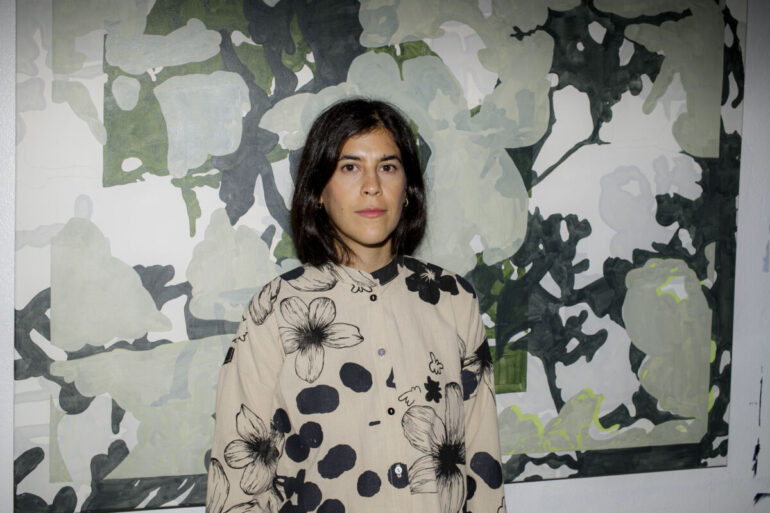
An artist who is slowly but surely captivating Argentina with her murals, Dana Alessi is arriving in Sarajevo soon. On this occasion, she spoke with FBL magazine about nature as an endless source of inspiration, the sense of tranquility art can convey, and her journey from fashion design to street art.
Your practice moves across painting, murals, and textiles. What draws you to working between these different materials and formats, rather than settling into one? And how — and why — were you first drawn to muralism specifically?
– My background is in design; I graduated from university with a degree in Fashion Design, so textiles are a fundamental part of my way of thinking. I’ve also been connected to painting from a very young age, and for as long as I can remember, this was a place where I’ve always felt very good. For me, all these materials are very important to each other; they constantly feed off one another, which is why moving from one to another is stimulating for the work itself. Murals are the reason I dedicated myself completely to art. When I was studying, I lived outside the capital, so I had to take long bus trips. During all that time, I would look out the window and start connecting with the streets. The murals caught my attention; I started wondering why those people dedicated so much time to it, why, what they were thinking, and that feeling began to grow within me. And from there, towards the end of my studies, I did my first mural, and at the same time, I also started making paste-ups because I felt safer being a girl on the street. I would draw on paper in my studio and then stick them all over the place, gaining confidence, and then the murals came more frequently and never stopped.
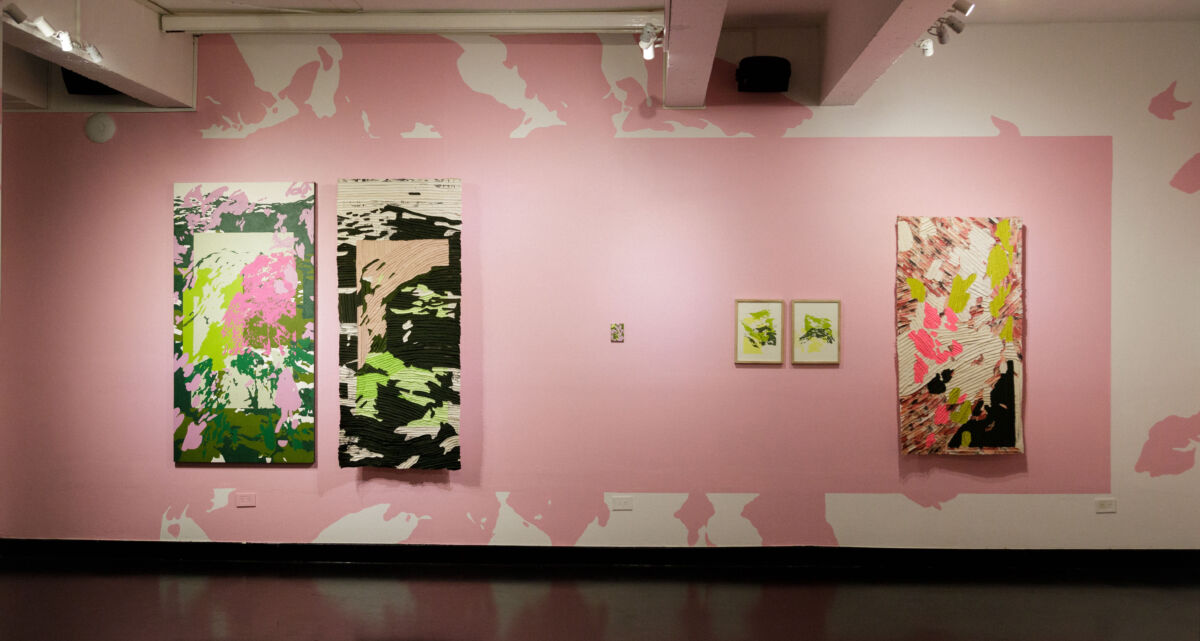
Textiles carry very different histories and associations than muralism — one is intimate and often domestic, the other public and monumental. How do you navigate moving between those two registers, and does one inform the other?
– Both are in charge of dressing something, from where I see it. I like to think of both as skins: one dresses bodies or things and the other dresses the city, the landscape. Yes, one informs the other. Sometimes I will be painting, and I will start thinking about how this would look in someone walking, moving, or how it would look if a dress a mountain with it? I take a lot from nature; nature is an infinite source of images and information. I like, for example, how the moss grows everywhere and dresses everything beneath it; I like to take this idea and try to translate it into the things I do.
Your style is predominantly abstract. What does your creative process look like — do you take real-life elements that inspire you and abstract them, or do you let yourself follow a more intuitive play of color and shape?
– I take elements from real life and abstract them. I work with images and photographs of nature, mainly from my travels, and I also enjoy observing the city and discovering curious details: nature, shadows, and things that resemble abstract drawings, construction errors, paint on surfaces, and so on. I create an archive of images that I like, based on things that I find interesting to draw later, or on elements of nature that I find very beautiful and that amaze me. Then I combine them using color. I try to translate the emotions, feelings, and sensations that I get from these observations.

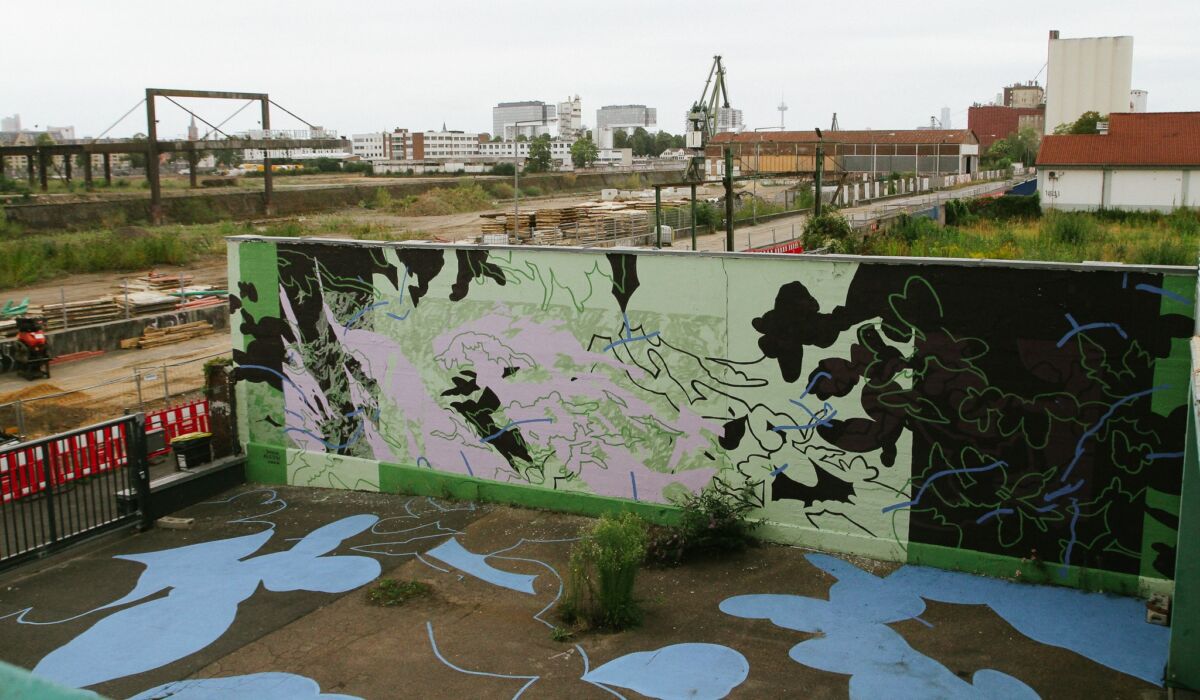
If you had to describe your practice in one word, what would it be?
– Landscape.
If you could design an ideal, unrestricted intervention — no budget or bureaucratic limits — what kind of public space would you want to transform, and how?
– I would love to dress a mountain with discarded textiles and mural painting and create a monumental piece, a mixed-media mural full of color and texture that could take on the shape of the things it’s covering, and interact with the nature that surrounds it. That people could feel, observe, and contemplate it from close and from afar.
In 2021, you received the Argentine Women Muralists Award. What did that recognition mean for you at that point in your career?
– Winning this award, I believe, marked a turning point in my career. I think it helped to put me on the map somehow and also emphasized a different approach to muralism, focusing on the artist’s vision, abstraction, and other forms of creation and expression. This helped me gain more respect and attracted more proposals based on my style and perspective.
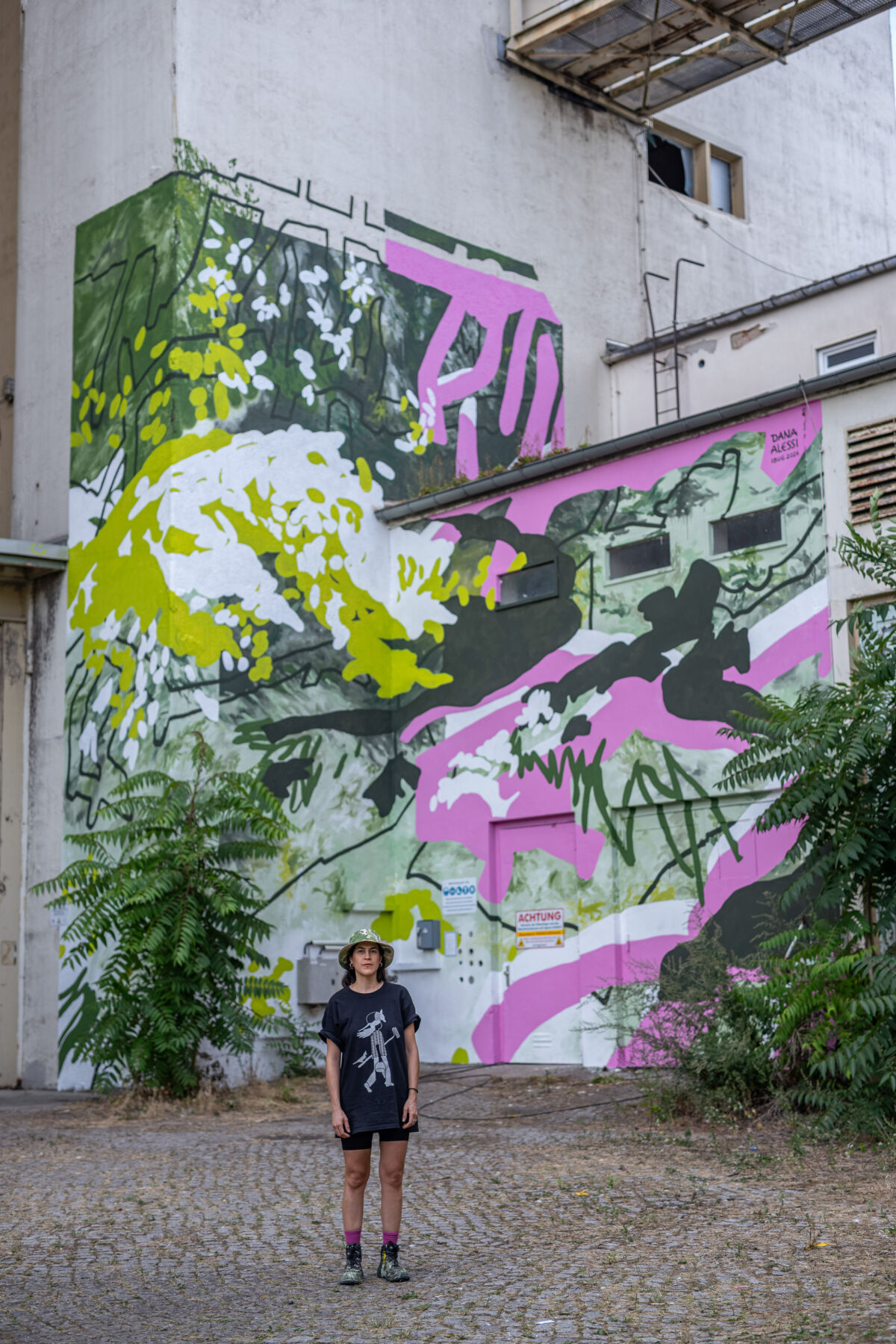
You’ve moved through several very different cultural and geographic contexts in just the past couple of years — Barcelona, Uruguay, Germany. What have you had to adapt or unlearn moving between these places?
– One quality I like about myself is the capacity to adapt; it’s something I really enjoy doing. I think it brings me to many different and enriching experiences. The truth is that all these places are very different in history and cultural codes, but at the same time, I felt at home in all of them. Painting creates unimaginable bridges that transcend any border. In the end, we’re all there sharing a moment doing what we love, which is painting. We’re like children making new friends in the park; all it takes is an introduction: Hi, my name is Dana. I’m an artist; I like to paint. Do you too? Let’s paint together!
What do you hope stays with someone who walks past one of your murals, after the initial impression fades?
– I would like them to leave with a feeling of calm, tranquillity, and joy, similar to the sensation we get when we lie down on the grass and watch the treetops move with the wind, and listen to the sound of the leaves and the wind.
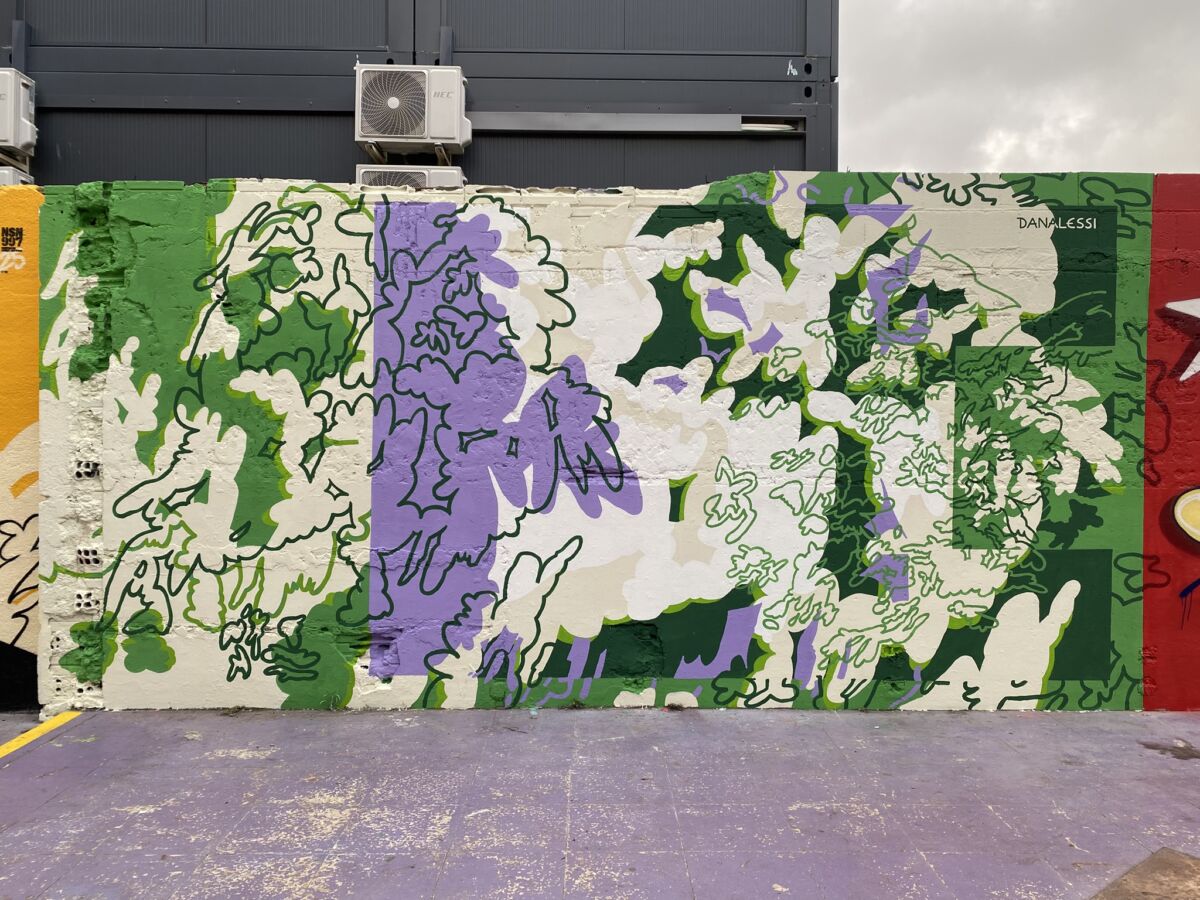
You’re soon coming to Sarajevo to paint at the sixth edition of FASADA Festival, whose theme this year is Topographies of Disappearance. How do you interpret this theme, and what’s the concept behind the mural you’ll be painting?
– I was interested in translating this idea of disappearing topographies through color. After researching the bibliography the festival sent to me, I investigated several things and images that, due to their shapes or what they represented, caught my attention. Color is almost always my first trigger when thinking about where I want to begin. In this case, the image of two colors that share a value came to mind, and if I converted them to grayscale, perhaps it would all be the same tone—colors that are present, but depending on how they are viewed, they could fade away, like yellow and lilac.
Two instances occur in the sketch. This idea of colors that are similar in tone, and whose shapes we cannot clearly define, reflects this transformation of valleys, rivers, and these natural spaces that have been swept away by buildings or human intervention. Then there’s this idea of diffused colors or particles that are disassembling and transforming into something different, and in contraposition those same valleys in full color, like the idea of what they once were, their vibrancy, their lushness.
From bottom to top, what exists: pure, lush nature, and its transformation into something blurred, losing form and becoming something else. Transitions of time and territory, in space.
Do you have any expectations of Sarajevo?
– I try not to have expectations, although everyone I’ve spoken to about coming to Sarajevo has told me such wonderful things that I’m really looking forward to going. But I prefer not to expect or look too far ahead; I like to be surprised and enjoy everything with a fresh, new perspective.
Uređivačka transparentnost:
Ovaj članak je pripremljen u skladu sa Uređivačkim smjernicama FBL magazina. Naša misija je osigurati tačnost, integritet i estetsku vrijednost svake objavljene informacije. Primijetili ste grešku ili želite uputiti ispravku? Javite nam se ovdje.
Sadržaj je autorsko vlasništvo FBL Creative, Mannheim.